Skip to content
← All projects
Branding and concept

A box that turns a purchase into a donation

Givy Box: I buy, I give, I help. A simple gesture, carried by a warm identity and neighborhood shops.

Timeline
[Period]
My role
[Concept, naming, visual identity, applications]
Team
[Solo or group]
Tools
[Illustrator, Photoshop, Figma…]
The context

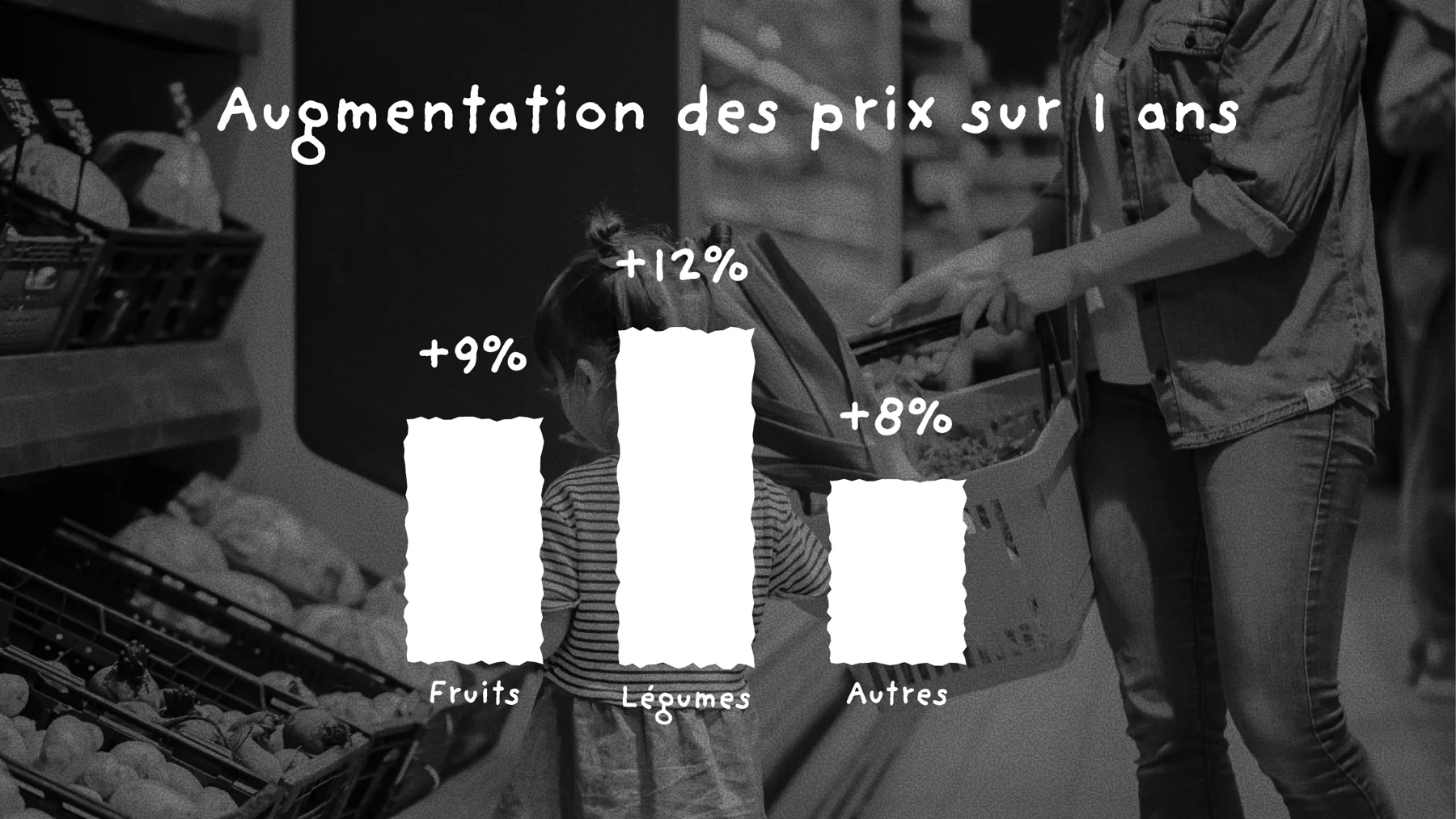
Food prices have risen sharply over the past year, and more and more people are struggling to feed themselves. Many don't dare to ask for help.

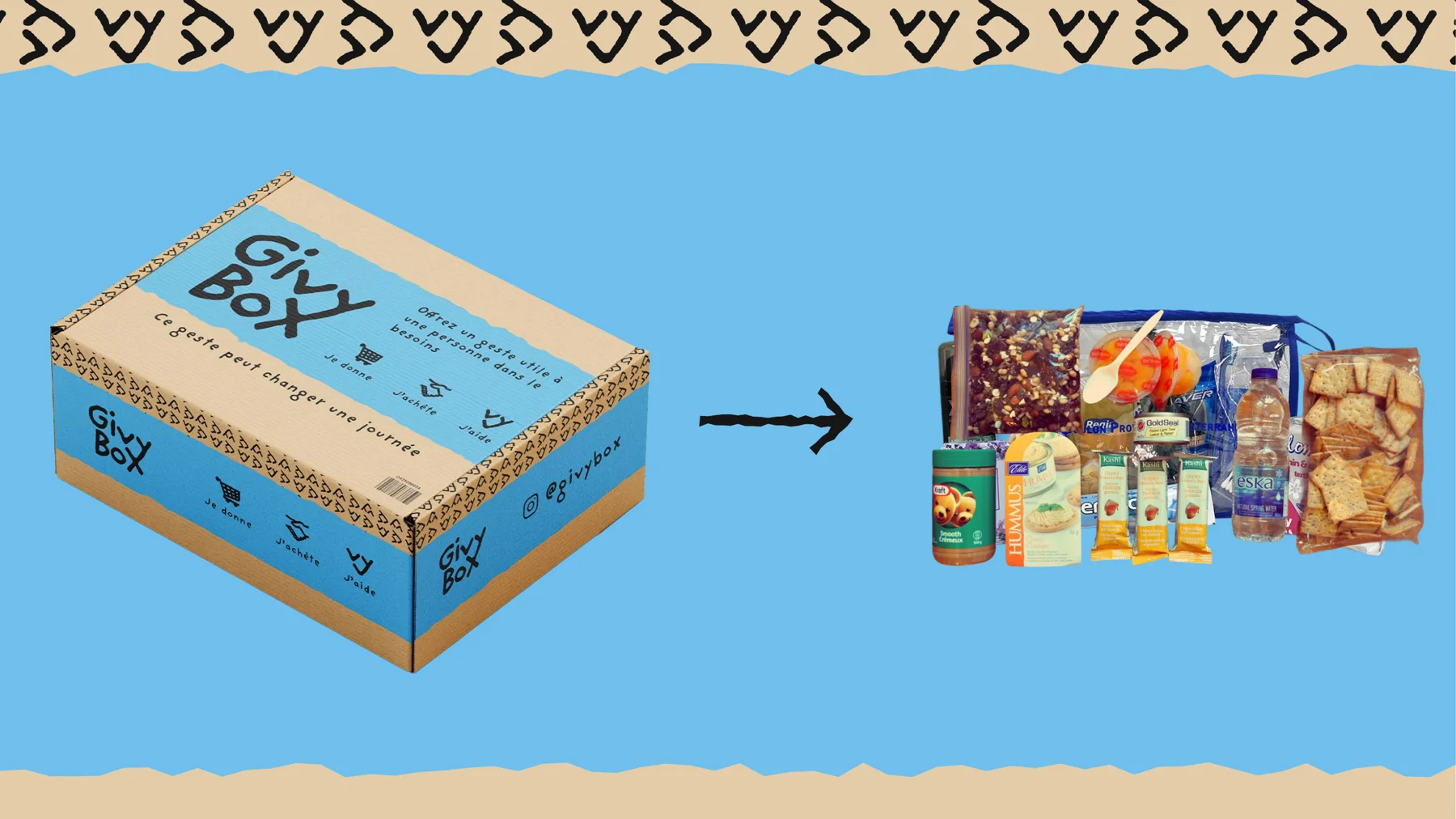
Givy Box starts from a simple observation: many people would like to help, but don't know how or where to start. The idea: a box of essentials, bought in a store, then dropped off at a partner shop where someone in need can come and pick it up, without having to justify themselves.

My starting question: How can we make giving as simple as an everyday purchase, and receiving as dignified as possible?

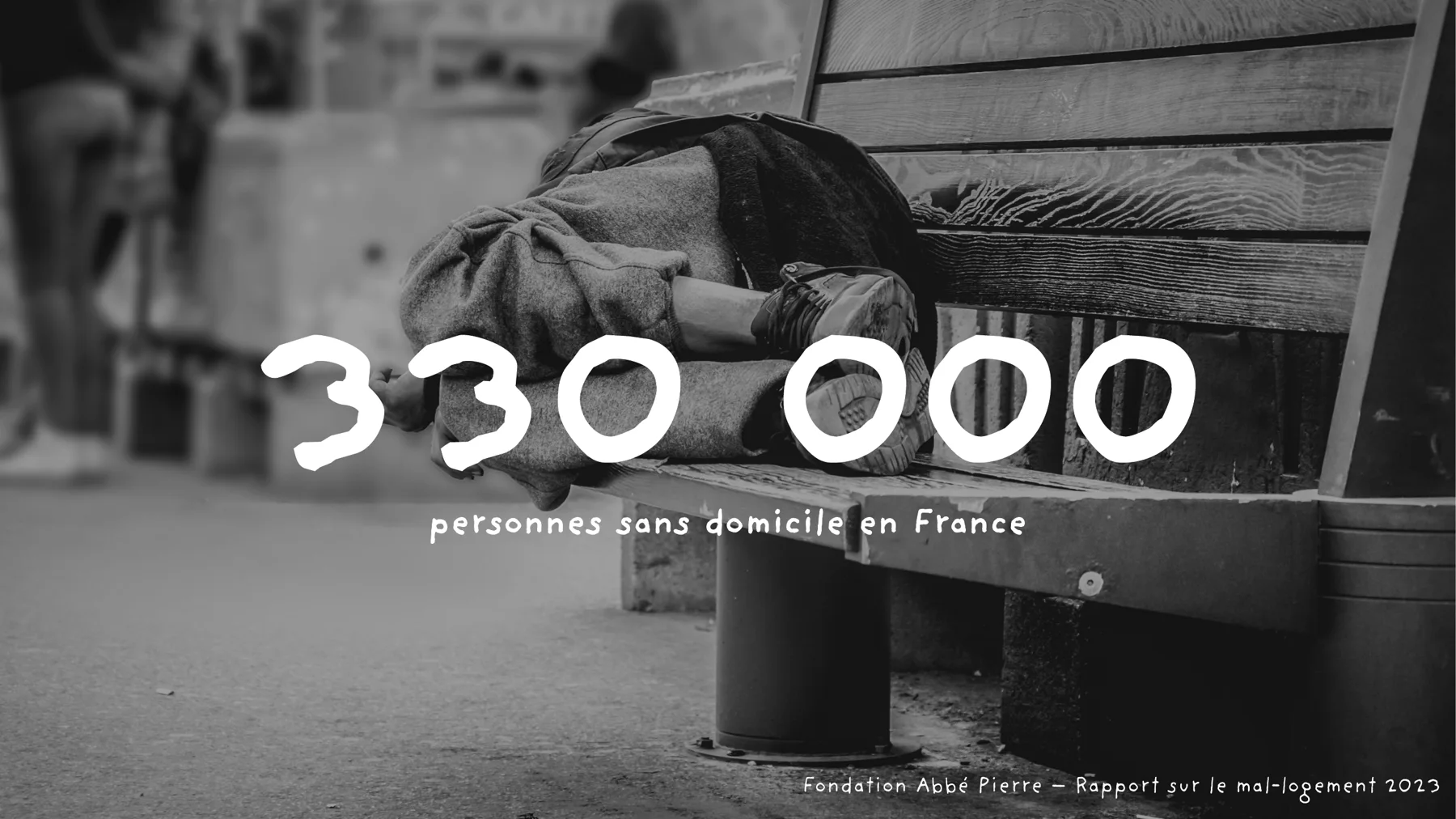
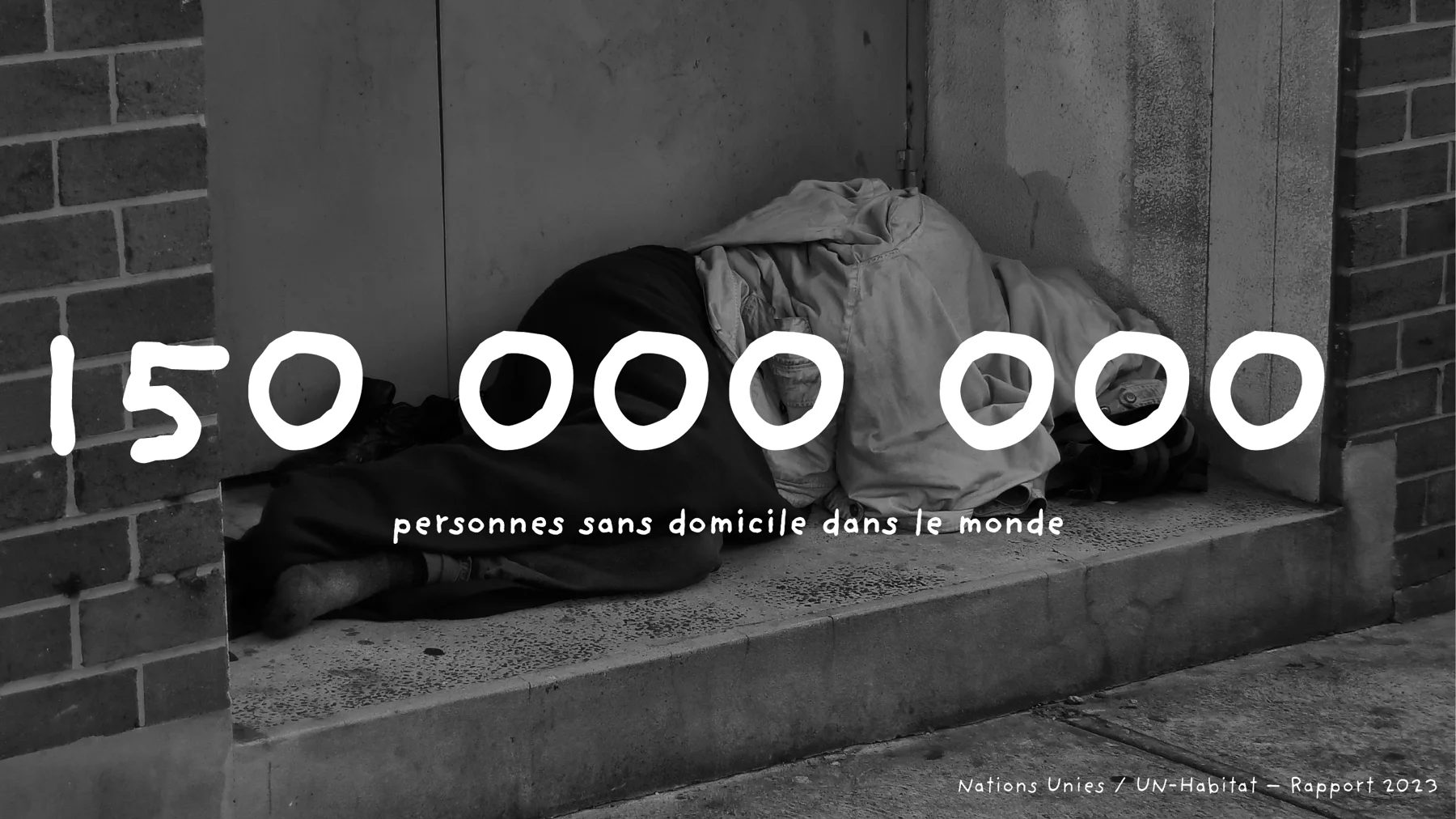
330 000people experiencing homelessness in France (Fondation Abbé Pierre, 2023)
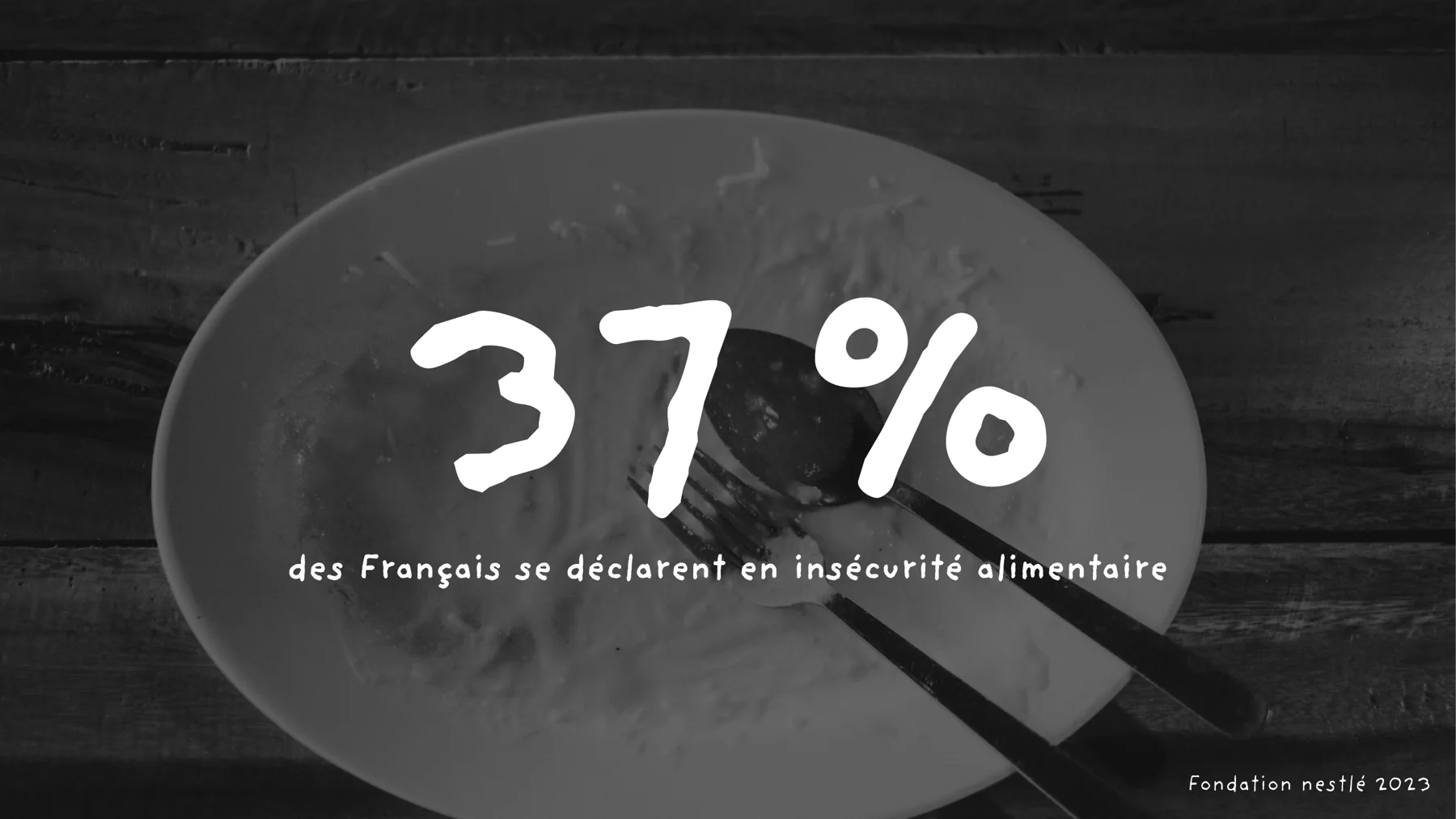
37 %of French people report being food insecure (Fondation Nestlé, 2023)
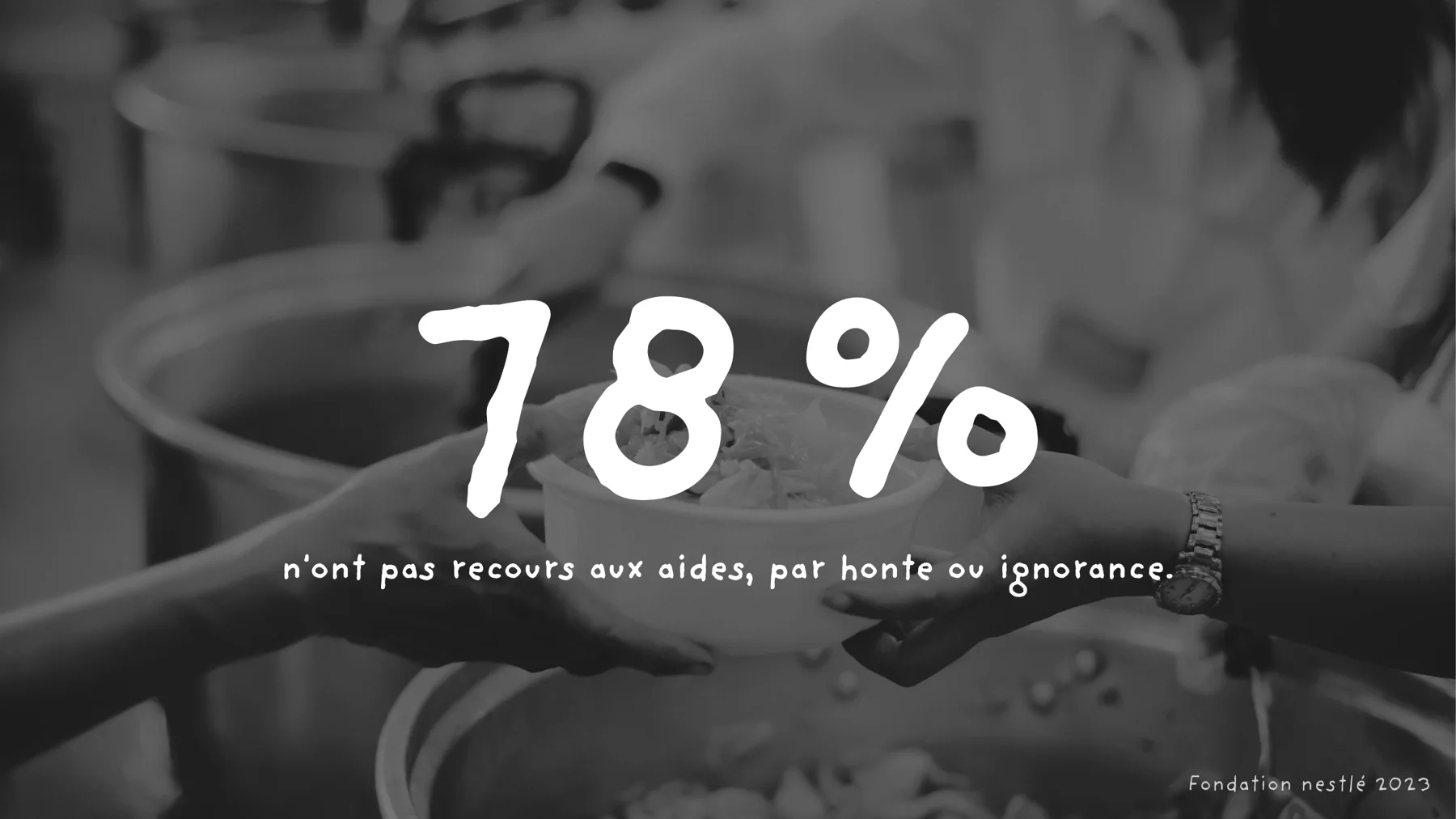
78 %don't use available assistance, out of shame or lack of awareness (Fondation Nestlé, 2023)
+12 %on vegetable prices over one year
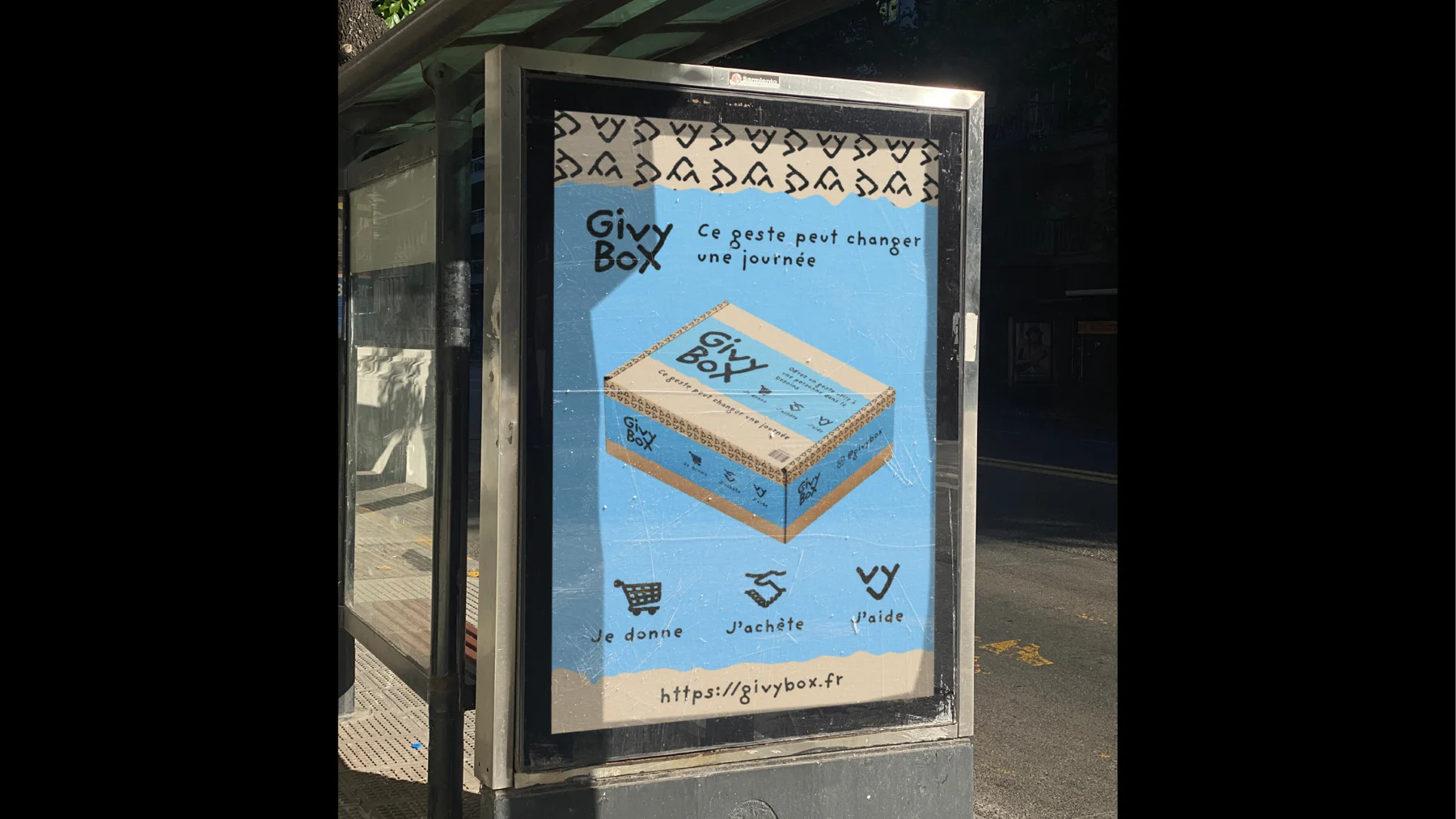
Givy Box poster in a bus shelter, "This gesture can change a day"
01Understand

Behind the numbers, real people

The presentation opens with the people the project exists for. Before talking about a box or a logo, I needed to convey the scale of the problem and the face it has.

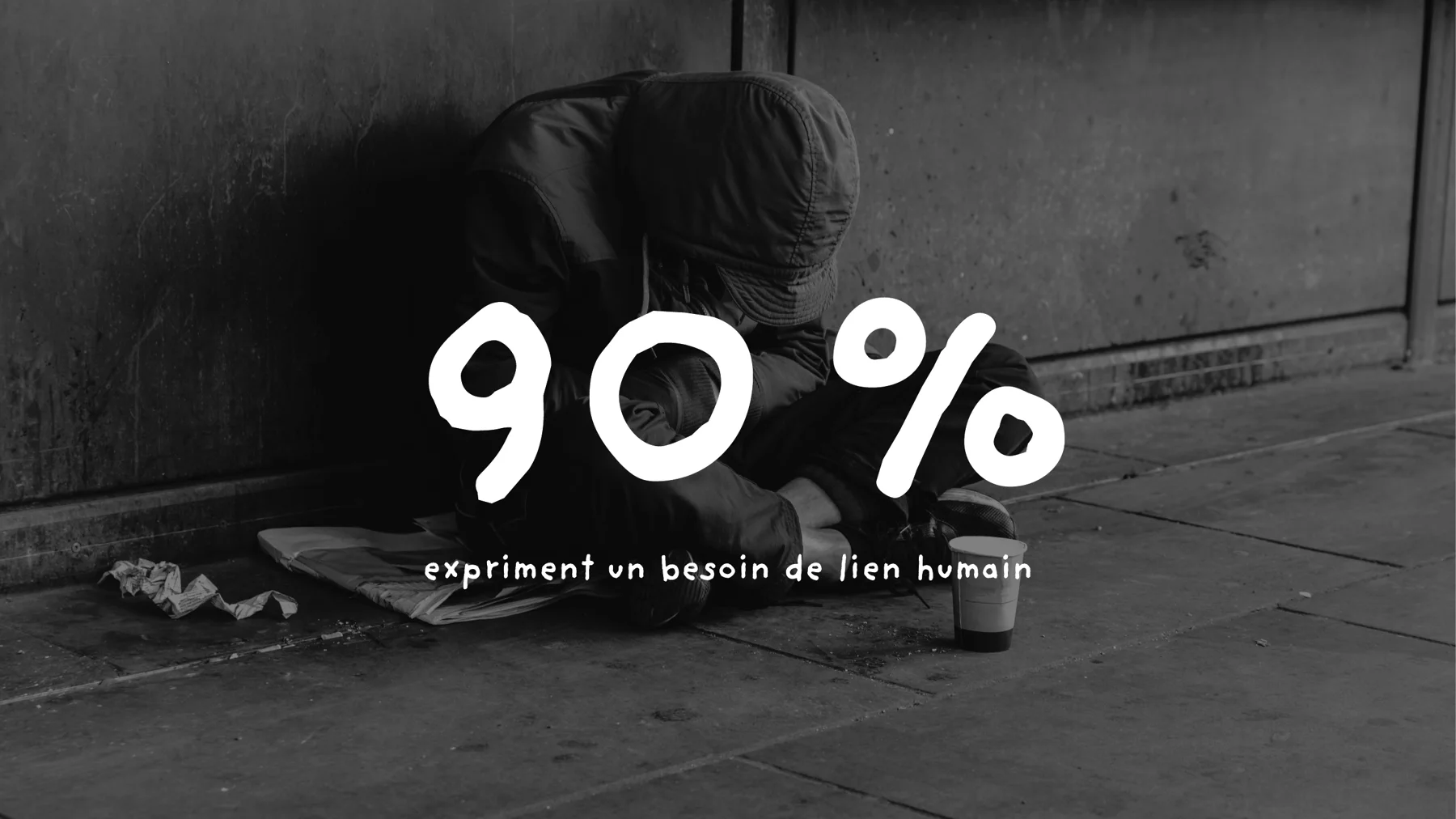
Insight 1The need isn't only material90% of people experiencing homelessness express a need for human connection. An anonymous, distant donation only addresses part of the problem.Source: presentation
Insight 2Shame is a barrier to accessing help78% of those affected don't use available assistance, out of shame or lack of awareness.Source: Fondation Nestlé, 2023
Insight 3Food is getting more and more expensive37% of French people say they experience food insecurity, and the price of vegetables has risen by 12% in a year.Source: Fondation Nestlé, 2023
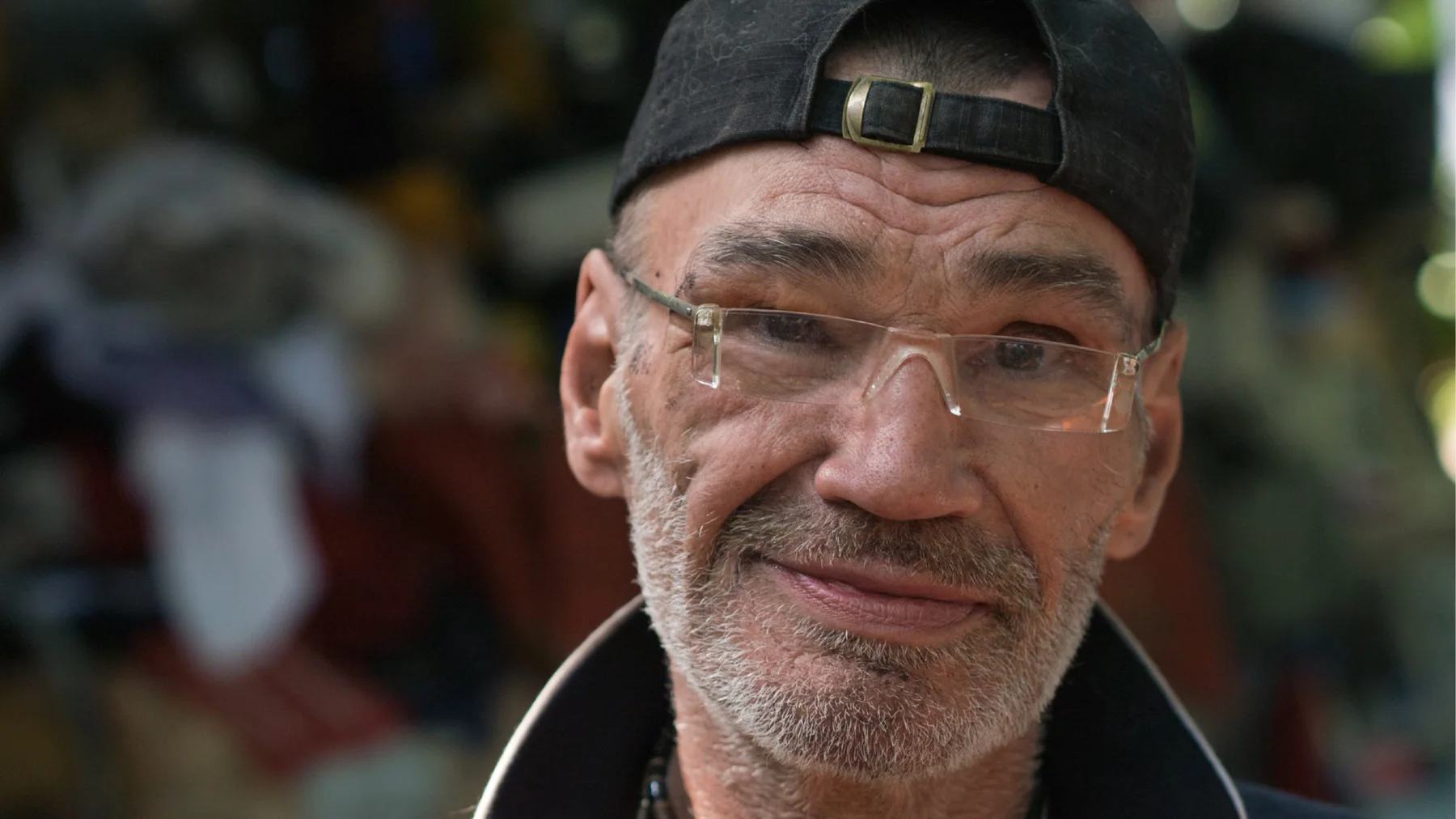
Portrait of a smiling man wearing a cap
[Caption: what this portrait tells]
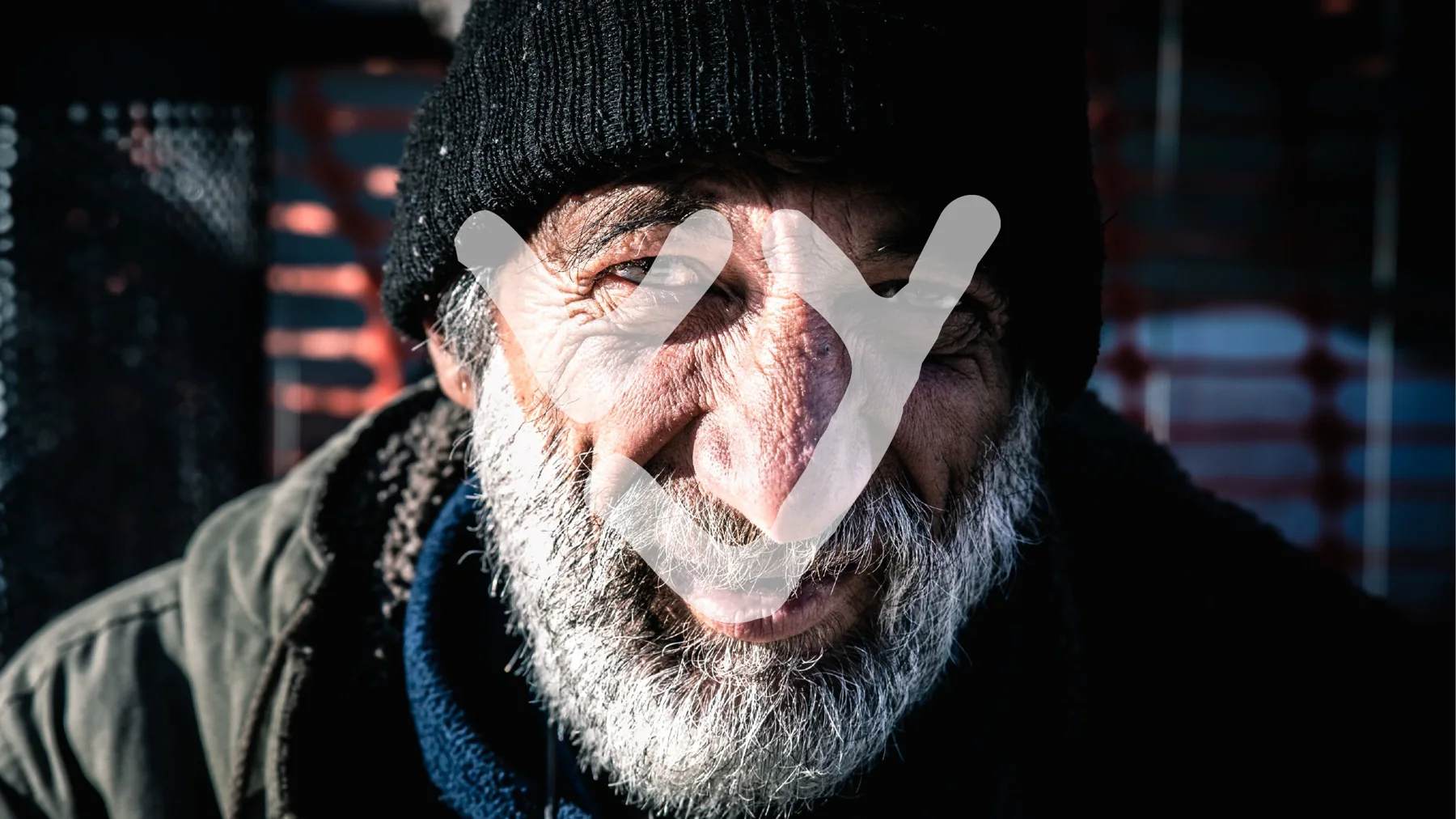
Portrait of a man with a white beard, with the Givy symbol
The Givy Box symbol placed over a face.
What I take from it

The problem wasn't a lack of desire to help, but the distance between those who want to give and those who don't dare to ask. Givy Box had to close that distance.

Next step · 02 Naming ↓
02Naming

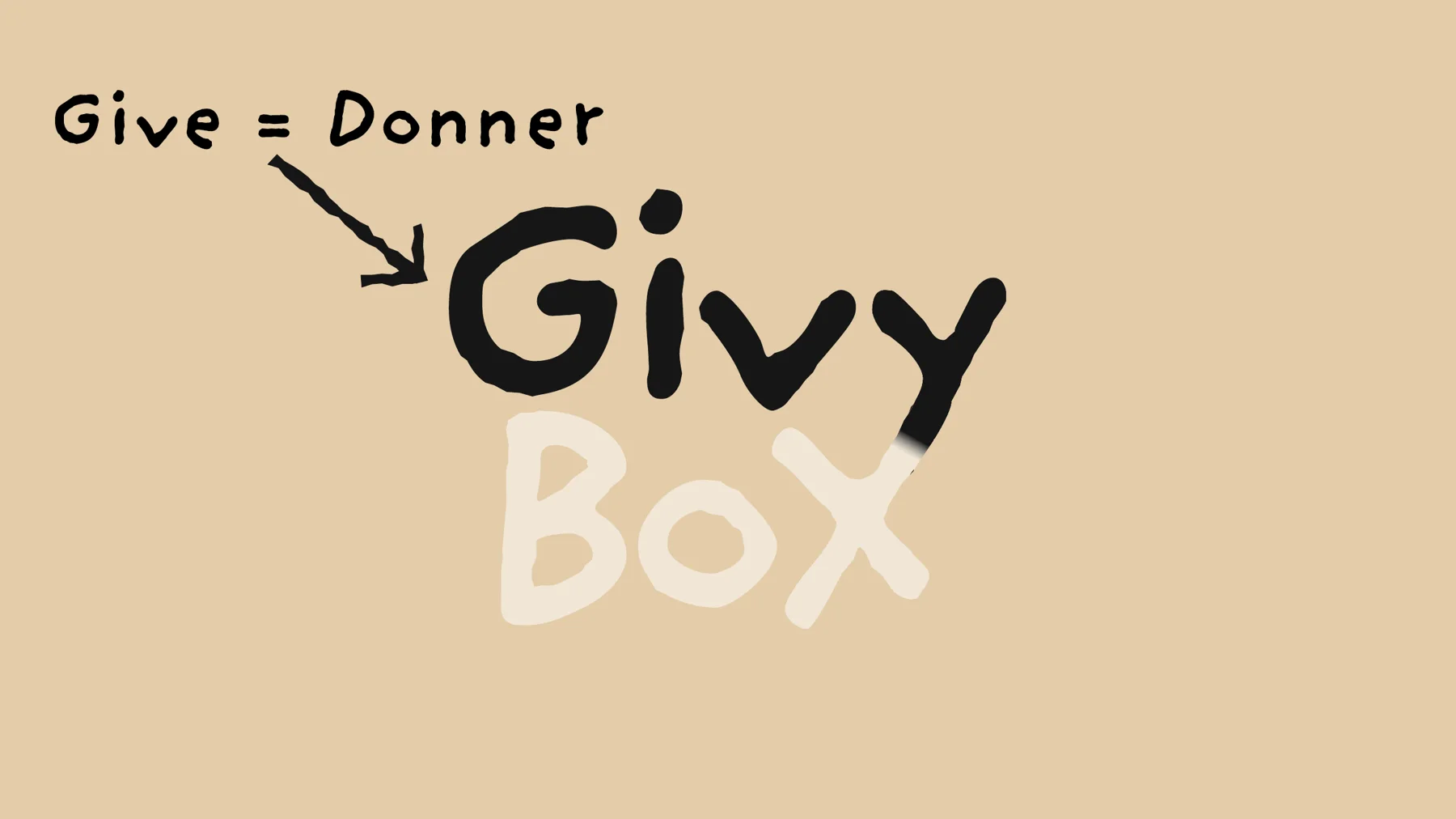
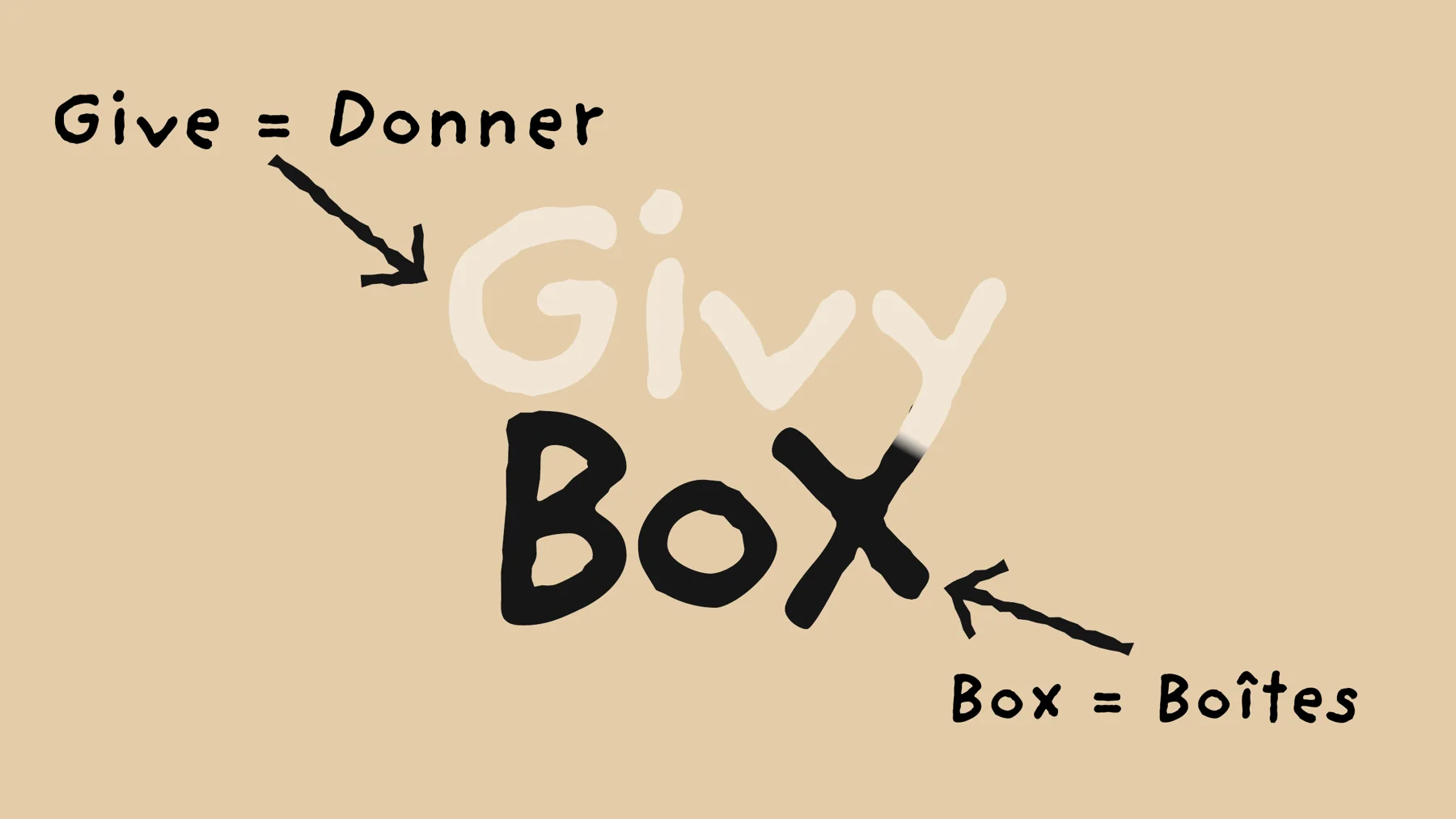
Give + Box

The name had to convey the gesture in a single word and stay easy to pronounce in French. Givy comes from give, and Box: what you give and the form it takes.

The Givy Box logo on a blue background

An identity that doesn't feel like "charity"

Hand-drawn lettering, a sky blue and a cardboard beige, and a frieze that echoes the symbol: the identity had to make people want to take part, rather than make them feel guilty.

[What guided your typography and color choices.]

What I take from it

With a name and an identity, Givy Box existed. Now the gesture had to be obvious to someone coming across the box in a store.

Next step · 03 Explaining ↓
03Explaining

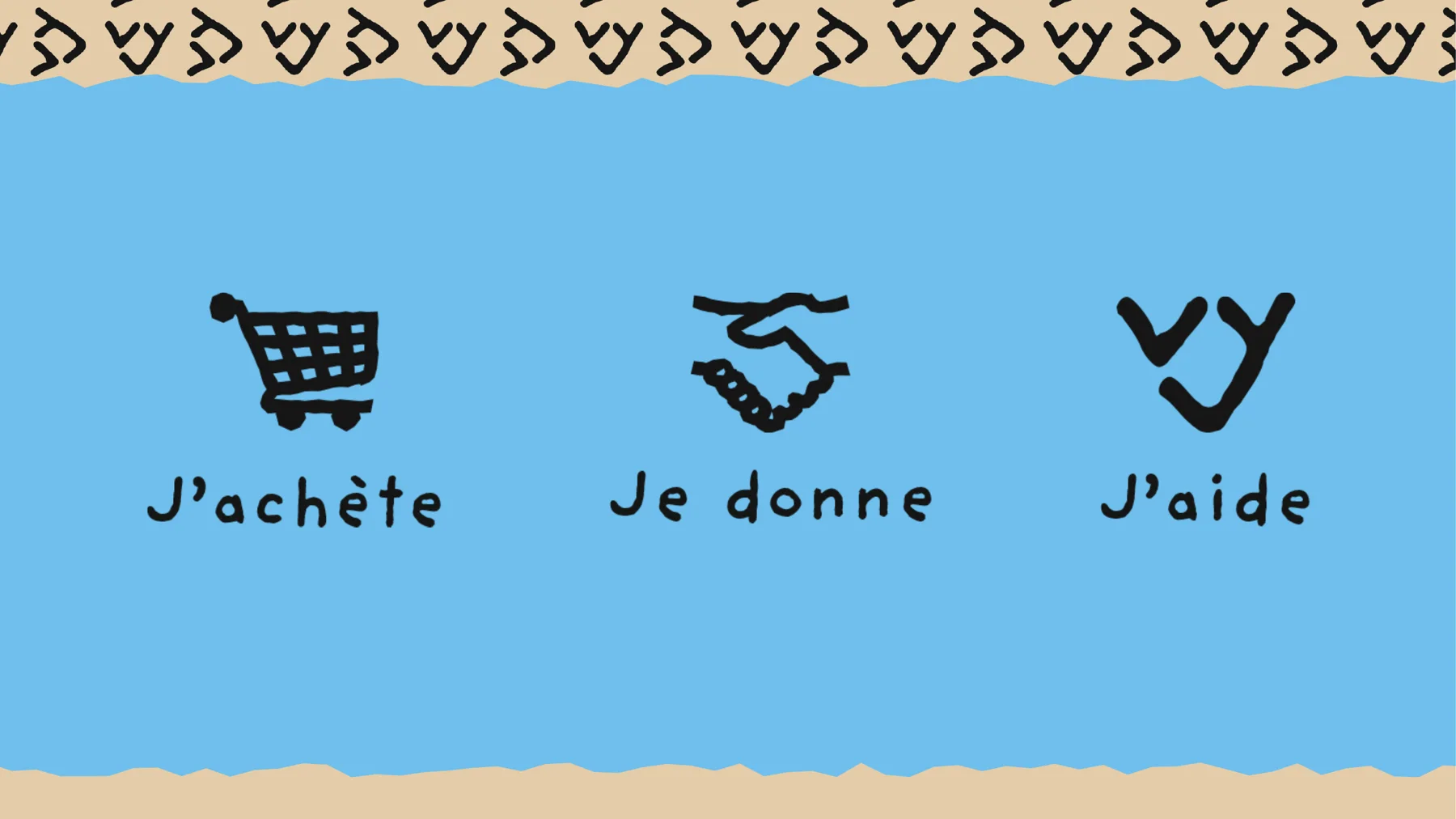
I buy, I give, I help

How it works comes down to three pictograms, printed on the box and on every medium.

Three pictograms: I buy, I give, I help
The principle in three gestures.
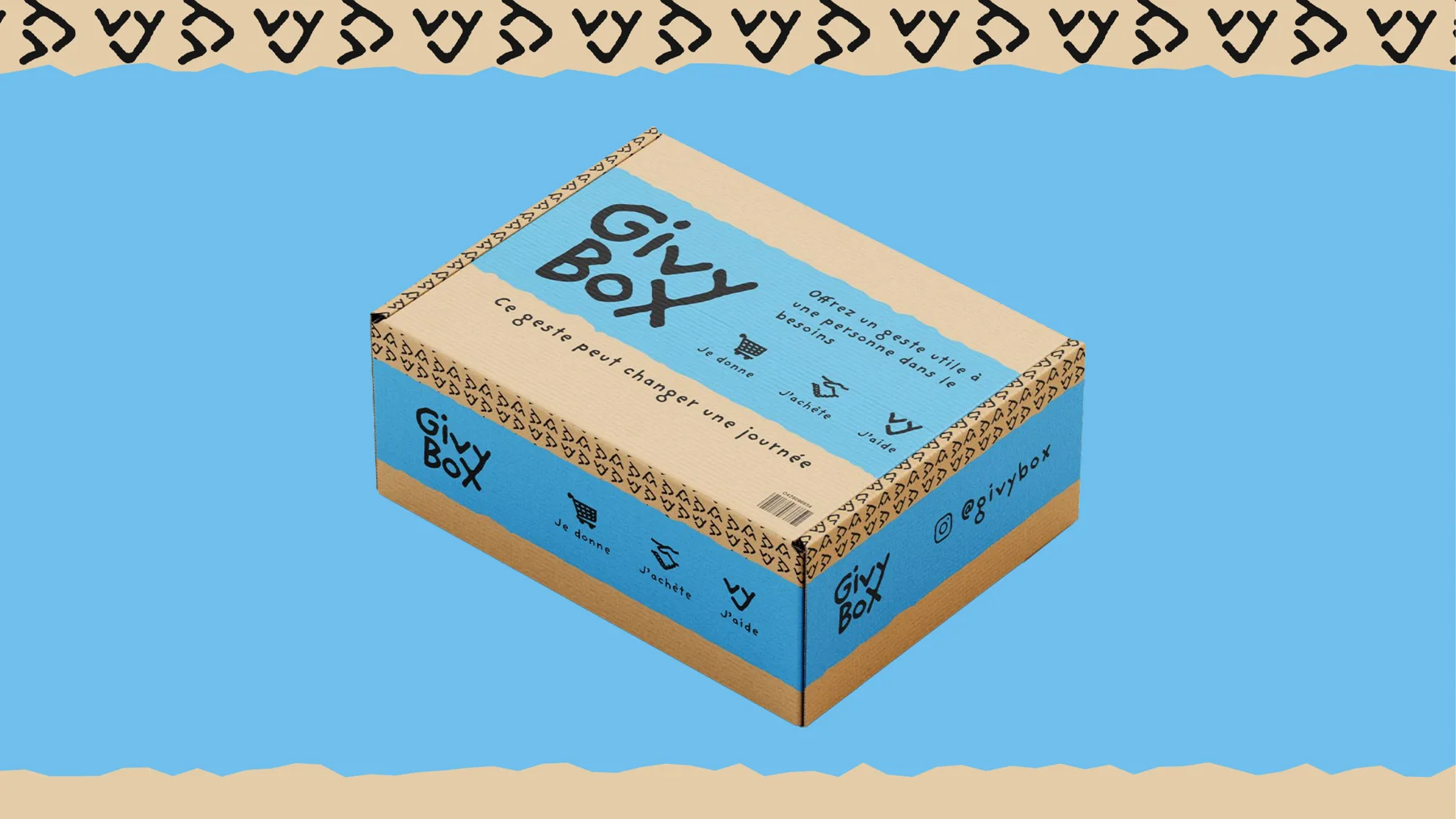
The Givy Box printed cardboard box
The box, in raw cardboard printed in blue.
The box and the essential products it contains
Essential products inside.
Decision 1

Working through neighborhood shops

  1. 1
    The finding

    78% of people in need don't use available assistance, often out of shame. An institutional setting can be a deterrent.

  2. 2
    What I chose

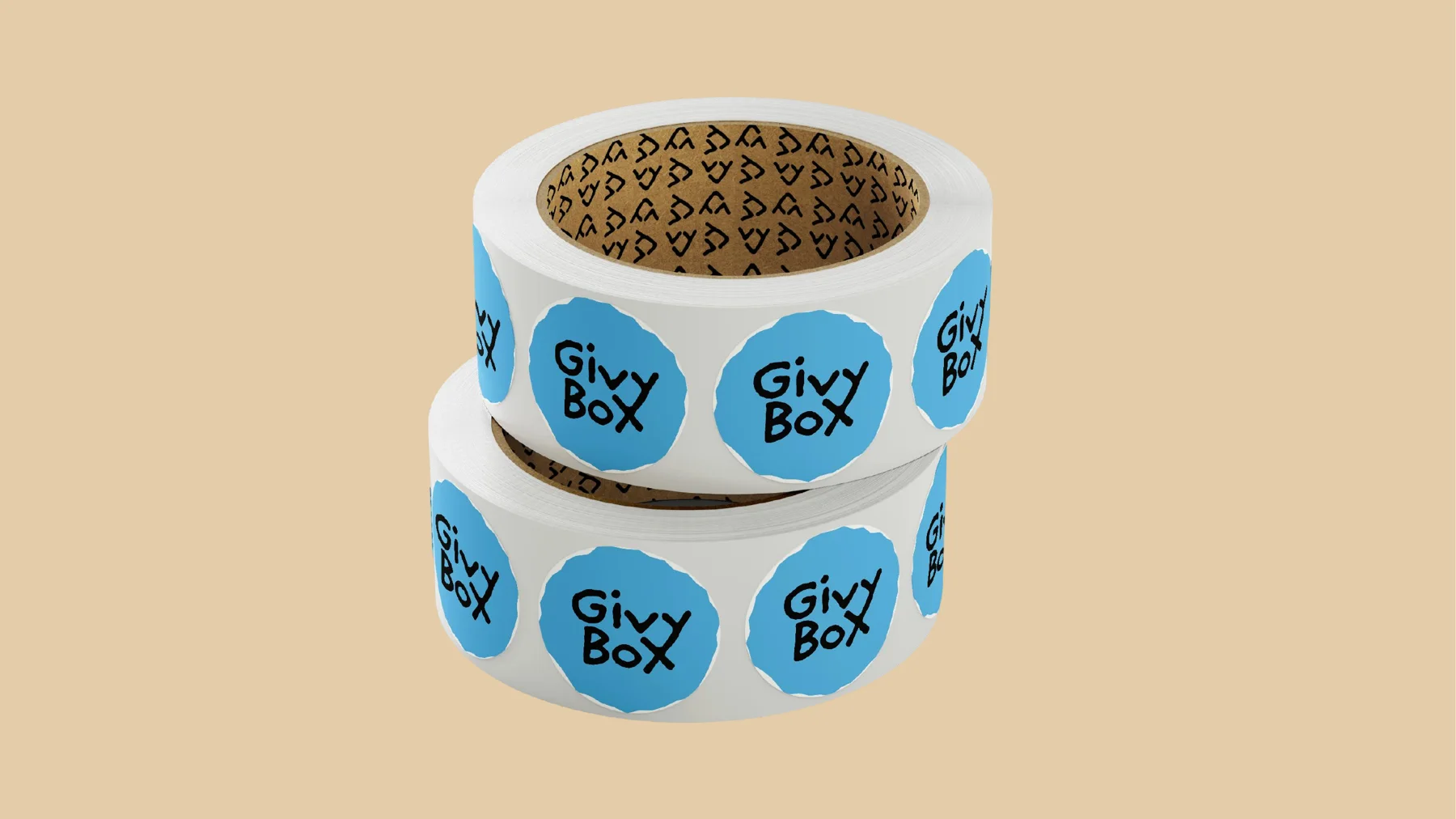
    The boxes are dropped off and picked up at partner shops, flagged by a sticker in the window: a familiar place, with no form to fill out.

  3. 3
    What I ruled out

    [The option that was set aside, for example a single collection point or distribution through a charity]

  4. 4
    The expected effect

    A donation that is as simple to receive as it is to give.

How I would measure it: [How you would measure it: number of boxes picked up per shop, partner shops…]
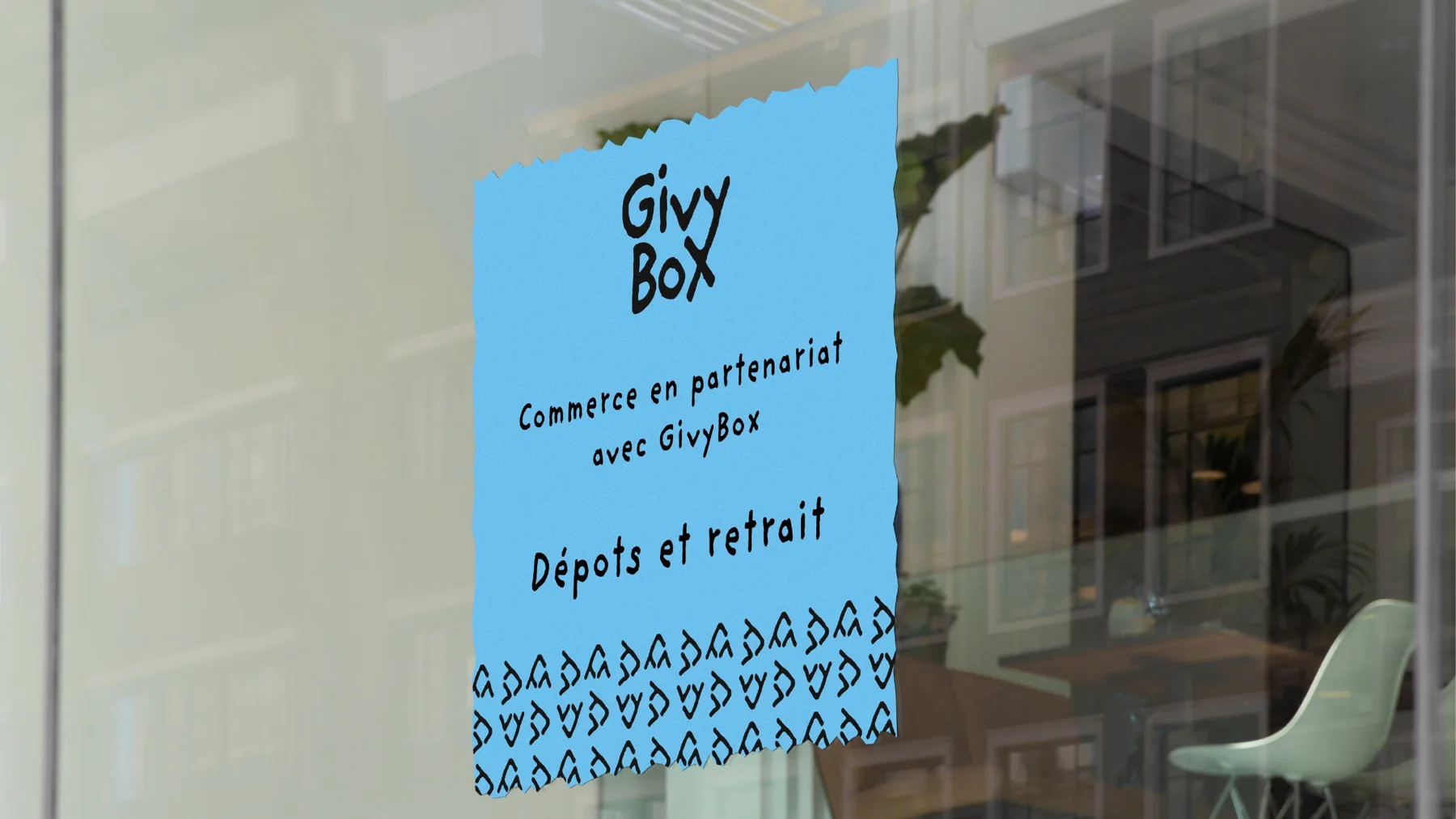
Window sticker "Shop partnering with Givy Box, drop-off and pick-up"
What I take from it

The gesture was clear. What remained was making it visible where people pass by every day.

Next step · 04 Rolling out ↓
04Rolling out

From the bus shelter to the café counter

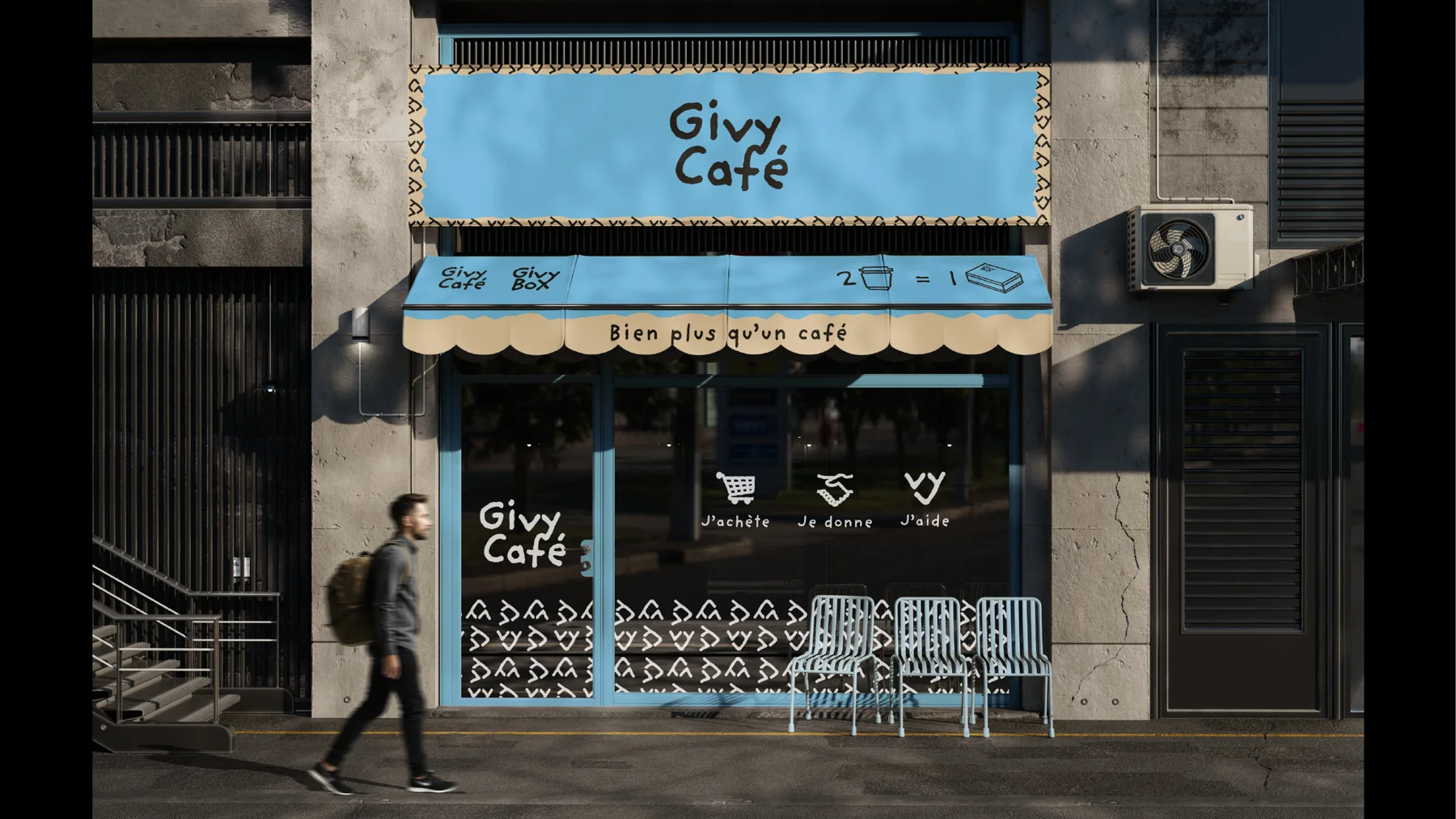
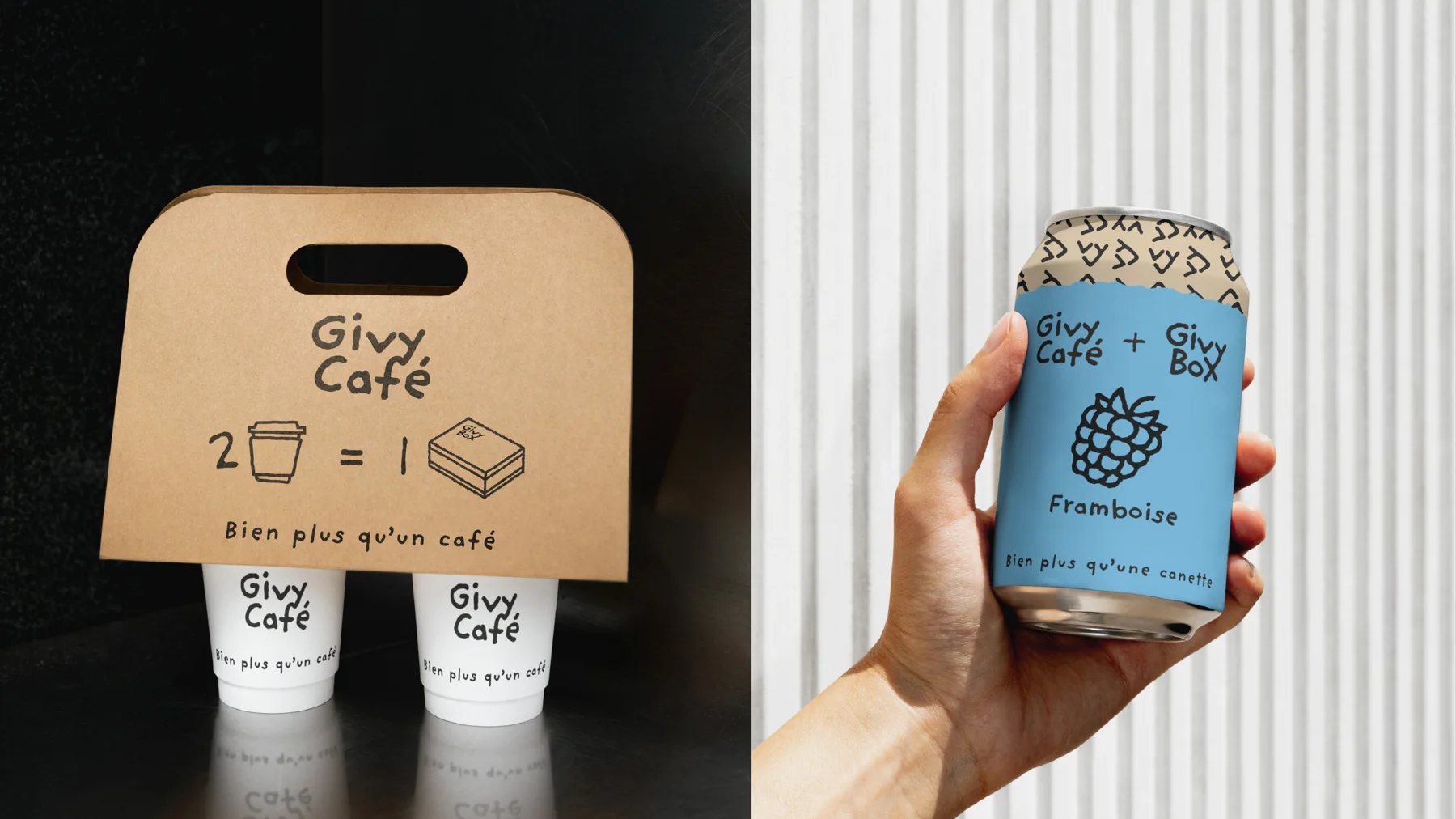
A poster campaign, stickers for shops, then an extension: Givy Café, turning an even more everyday purchase into a donation.

Decision 1

Givy Café: buy two coffees, give one box

  1. 1
    The finding

    Buying a box is a deliberate act. Many people won't think of it on their own.

  2. 2
    What I chose

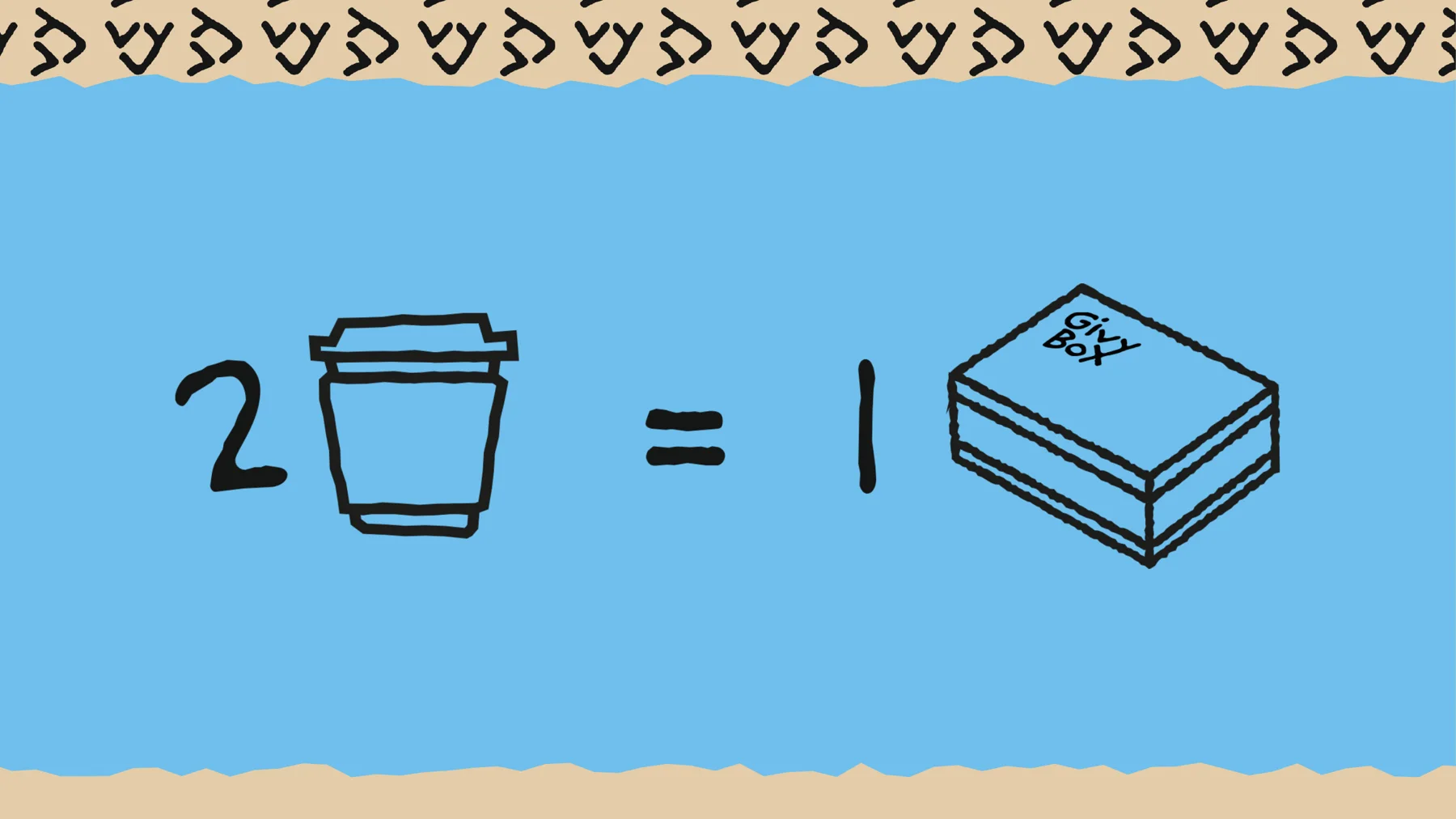
    A partner café where every two coffees purchased fund one Givy Box: giving becomes part of a purchase people already make every day.

  3. 3
    What I ruled out

    [The option I set aside]

  4. 4
    The expected effect

    Reaching people who would never have gone looking to give.

How I would measure it: [Number of boxes funded by the café each month]

2 coffees = 1 Givy Box
What I take from it

A box, a name, an identity and a café: the whole system rests on the idea that giving can be as simple as ordering a coffee.

Next step · 05 Takeaways ↓
05Takeaways

What the project taught me

[A one-sentence takeaway: what this project taught you about design in service of a cause.]

What was tested

[Feedback received on the concept, if any]

What I would do differently

[What you would change today]

What I keep

[What you take away from it]

Next projectTison — the app for trips with friends
View project →